
BJJ physical therapy · Lafayette, LA
Grappling breaks people in its own particular ways, and most clinics answer every one of them the same way: stop training. I train jiu jitsu myself. I have treated the neck that went in a scramble and the shoulder that went in a kimura, and the plan is always to get you rolling again, not to keep you off the mat until it settles down on its own.
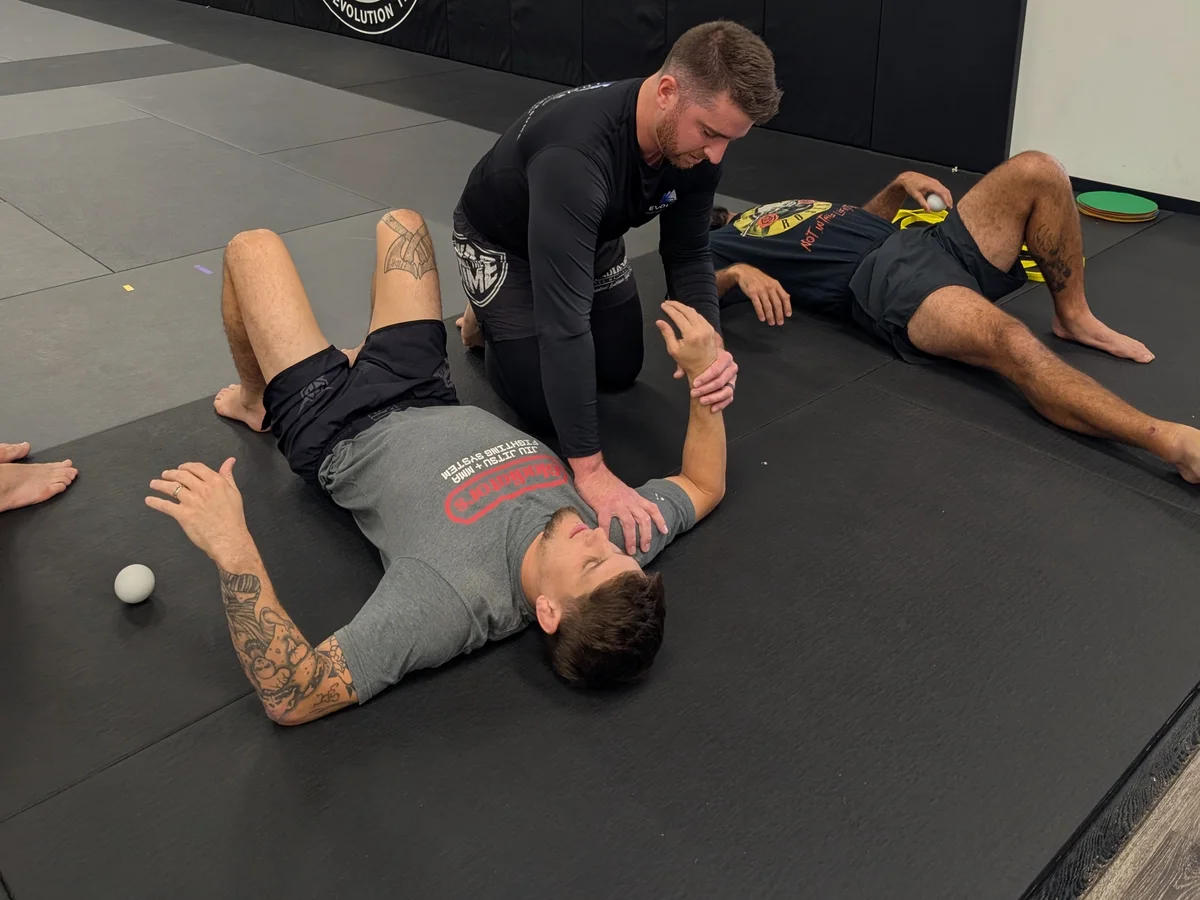
- I train jiu jitsu
- Orthopedic fellowship-trained
- Certified in dry needling
- One hour, one-on-one
Nobody who trains wants to hear “take six weeks off”
You already know what six weeks off does. You lose the timing first, then the conditioning, then the habit, and the longer you are away the harder the first session back is going to be. Most people in that position do one of two things. They stop going altogether, or they go back early and hurt the same thing again.
Both of those happen because the advice was never really about your shoulder. It was a general answer given to a general person, by somebody who has never had a grip broken on them.
The six I see most in grapplers
Your plan is built around your sport. These are the problems grappling keeps producing.
Necks
The one that scares people, and the one most worth assessing properly. Stiffness through the mid-back and ribs sends the load straight into the neck, and the neck is the part that complains. Nerve symptoms into the arm are common and usually manageable.
Shoulders
Kimura, americana, posting out of a throw, or a thousand reps of framing. A shoulder that hurts overhead is usually a shoulder the shoulder blade and trunk stopped supporting. Treating only the joint is why it keeps coming back.
Knees
Playing guard, getting stacked, and the twist nobody saw coming. Knees are rarely the problem and usually the place the problem lands. If the hip and the ankle are not looked at too, it stays.
Grip, elbow and hand
Grip is the first thing to quit and the last thing anybody rehabs. Elbow and forearm pain in grapplers is nearly always a loading problem, not a damage problem, and the fingers that hurt after years of gi grips get their own plan.
Low back
The quiet reason people in their forties stop training. Most of it is manageable, and almost none of it means you have to stop. Pain that refers into the hip or the leg gets assessed, not guessed at.
Hips and guard
A hip that will not rotate sends the work somewhere less able to take it, usually the back or the knee. Groin strains, pinching in the front of the hip, and the glute strength that never came back after the last layoff.
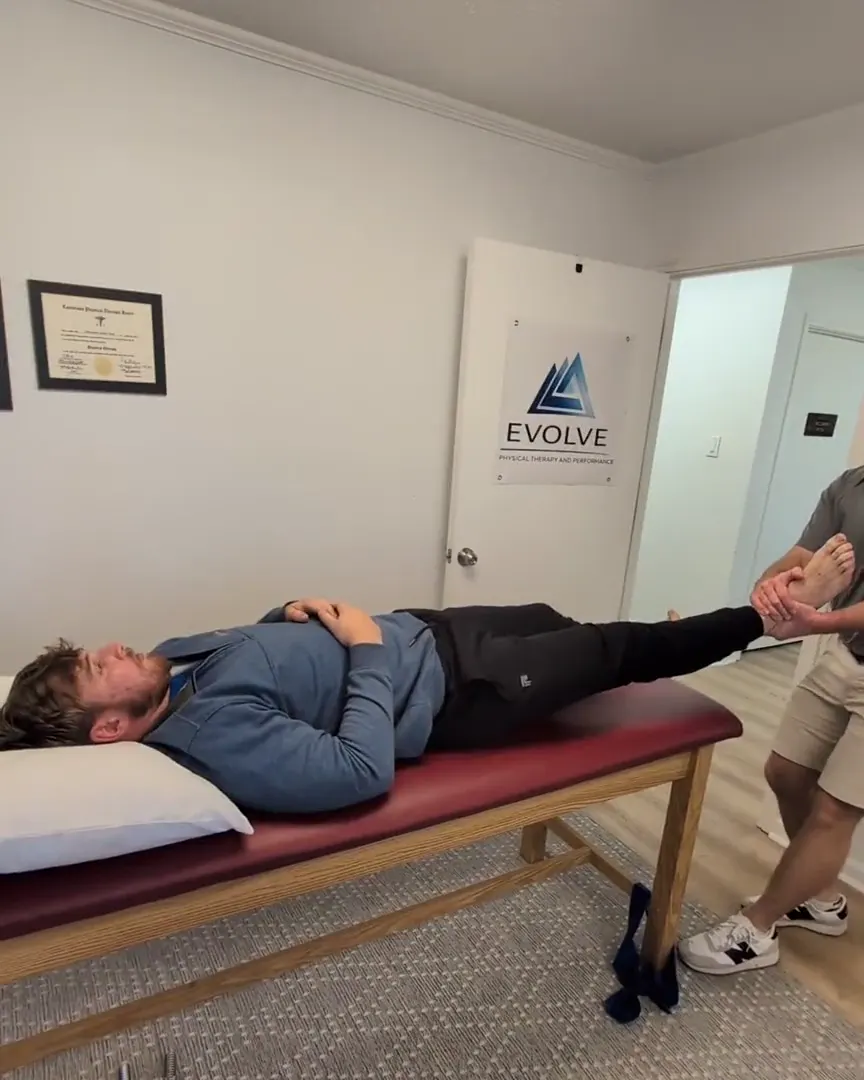
I train, so you don’t have to explain it
I train jiu jitsu. That is not a line on a page to make this page feel relevant. It means you can tell me the injury happened on a stack pass and I will know what you are describing, and it means I know what is actually being asked of a neck in round four of a hard roll.
It also means I know the answer is almost never to stop. We change what you train and how much of it. You might drill without live rounds for a stretch, or roll with people you trust and leave the competition class alone for a month. The mat stays in your week.
On the clinical side you get a fellowship-trained orthopedic therapist for a full hour, one-on-one, every visit. Hands-on work and dry needling early to bring the pain down, then real strength work until the thing that failed is stronger than it was before it failed.
Two of them, at length
Both are Google reviews, both are training again now, and neither of them took six weeks off and hoped.
I train BJJ and injured my neck in class. After the injury I started experiencing numbness in my left hand and had almost no strength in my left tricep and left pec. An MRI later confirmed multiple cervical disc issues and some stenosis. I started working with Chris, and he built a program around the injury and my goal of getting back to training and lifting. One thing that mattered to me was that I chose not to medicate the pain or numbness. I wanted to feel exactly what was going on so I could tell if I was actually improving, and he respected that approach while helping guide my recovery. I followed the program exactly as prescribed and worked with him for about 6 weeks. From there I continued the plan on my own, and over the next couple of months the improvement was steady. Within about four months I had regained most of my strength, and the pain and numbness were pretty much gone. Long story short, I’m back training again and have been for a couple of years now.
Chris West is an unbelievable physical therapist. After my shoulder surgery, he guided my rehab with a clear plan and very detail oriented. He pushed me when I needed it but always made sure the exercises were safe but also very effective. Thanks to his knowledge and dedication, I was able to get back to training Jiu Jitsu in just three months. Since I’ve had no problems and shoulder feels even better than what it did before the injury. Chris cares about his patients’ recovery and performance, and I highly recommend him to anyone needing physical therapy. Chris West is a WIZARD!
You always know which stage you are in
Your plan is built for you. These are the four stages it moves through, so nothing in it is a surprise.
Evaluation
Find the root cause and leave with a clear plan.
Symptom Relief
Manual therapy, dry needling, and targeted exercise to get you moving with less pain, fast.
Strengthening & Load Conditioning
Progressive training matched to your recovery, so you heal without losing momentum.
Performance & Maintenance
Go past your pre-injury baseline and catch small problems before they become big ones.
What grapplers ask me
Do I have to stop training?
My neck has nerve symptoms into my arm. Is that an emergency?
Does dry needling hurt, and can I train the same day?
I have had surgery. Is it too late to come in?
Tell me what you cannot do on the mat
That is the whole first conversation. What hurts, what it is stopping, and what you want back. If I can help, I will tell you how I would go about it. If I cannot, I will tell you that too.
Book your free 15-minute callPick a time that suits you, and I will call you then. Fifteen minutes, free, and no pressure.
I train BJJ and injured my neck in class. Chris built a program around the injury and my goal of getting back to training and lifting. I’m back training again, and have been for a couple of years now.